
Sandra Bednarski


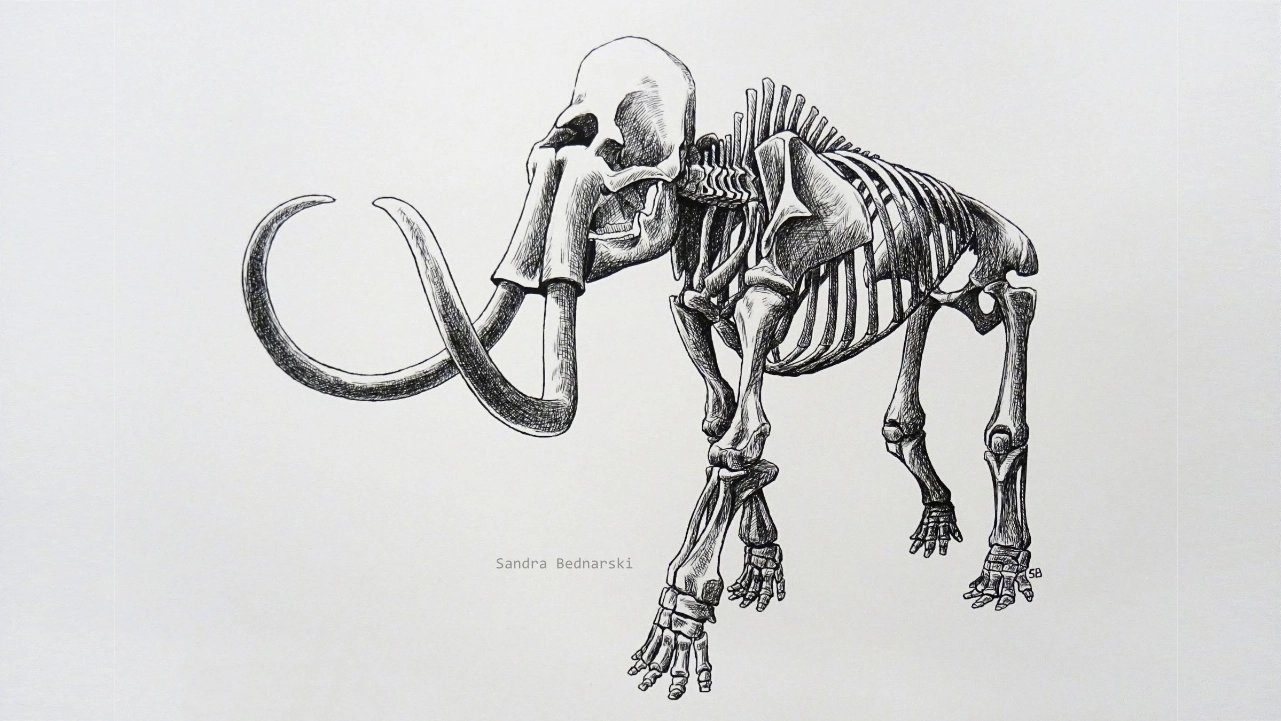
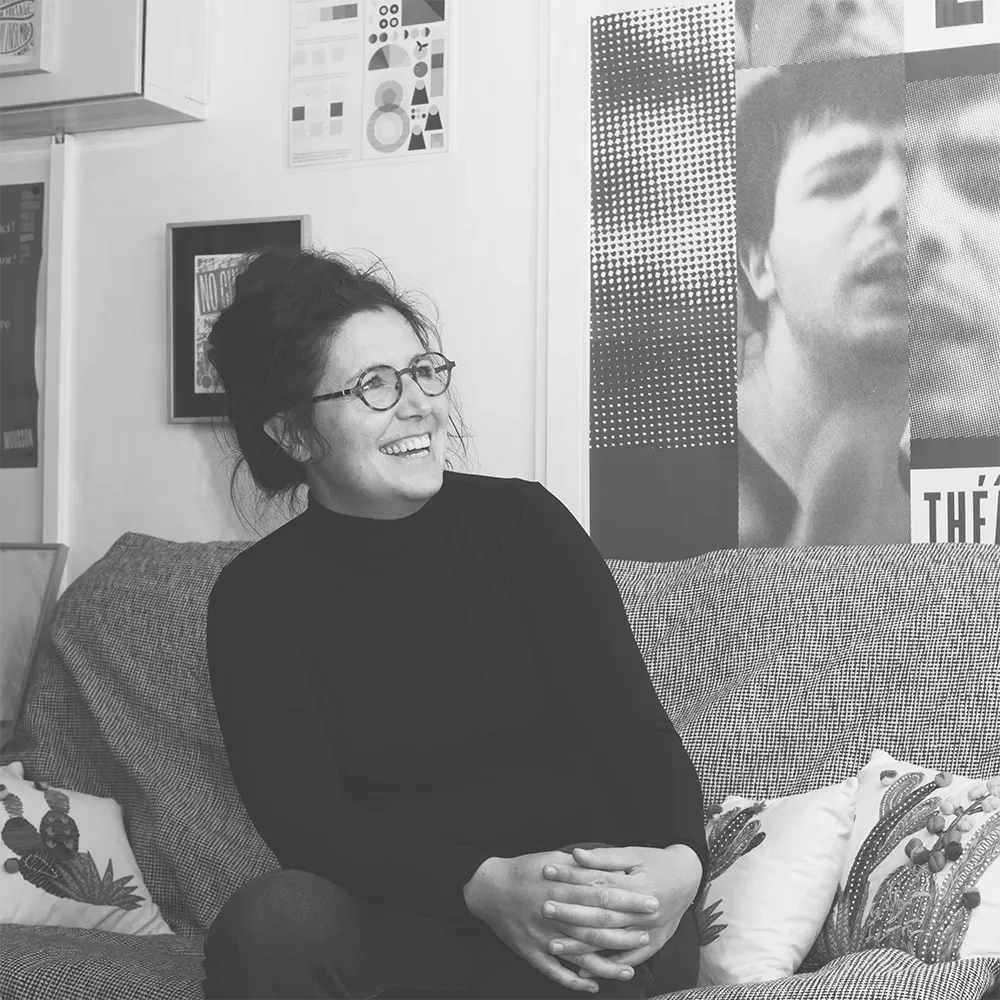
Sandra Bednarski is a visual artist who graduated from the Metz School of Art. Fascinated by animal anatomy and the evolutionary story it tells across geological time, she invites us to rediscover contemporary and prehistoric fauna through her sculptures, which are inspired by natural history museum collections.
SKELETON
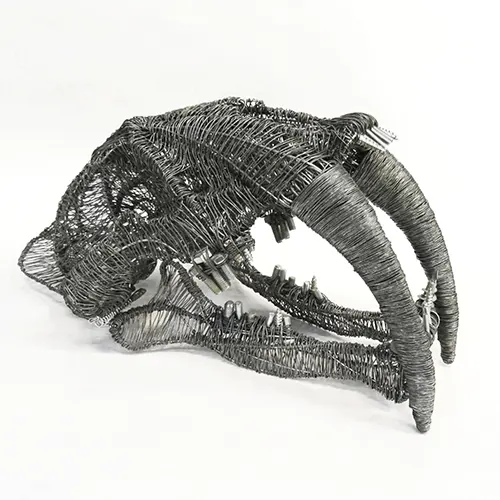
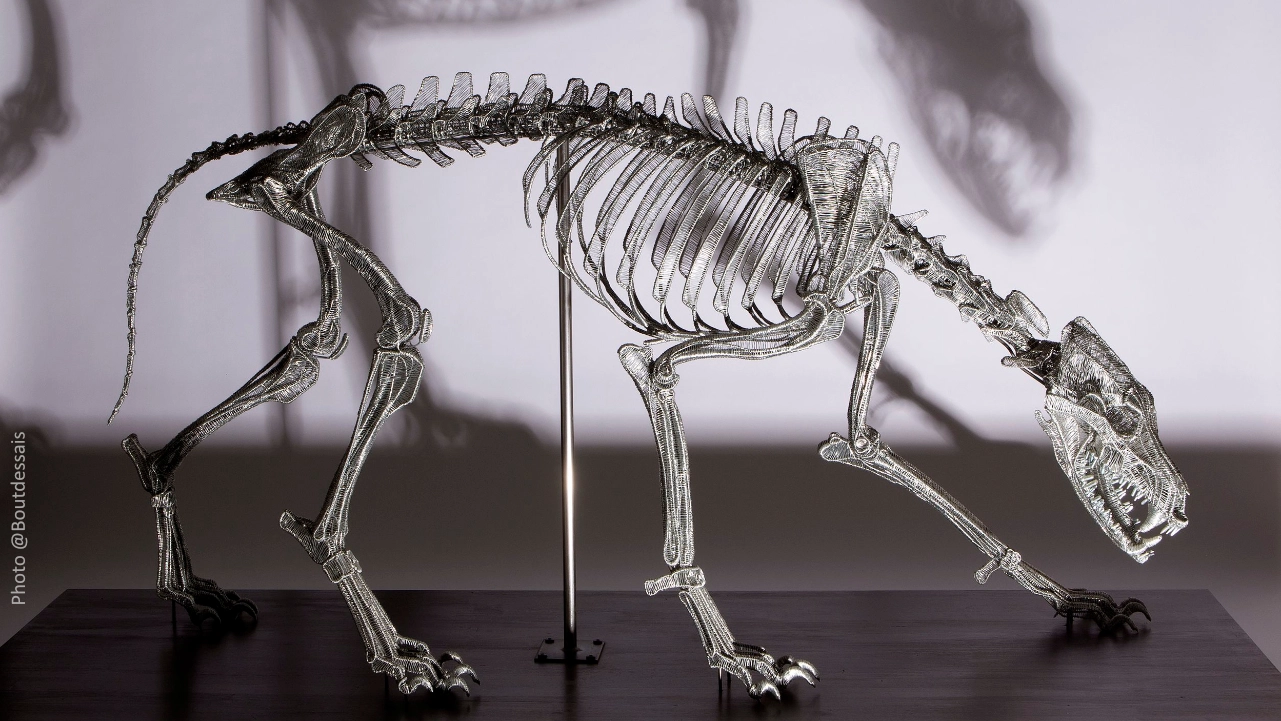
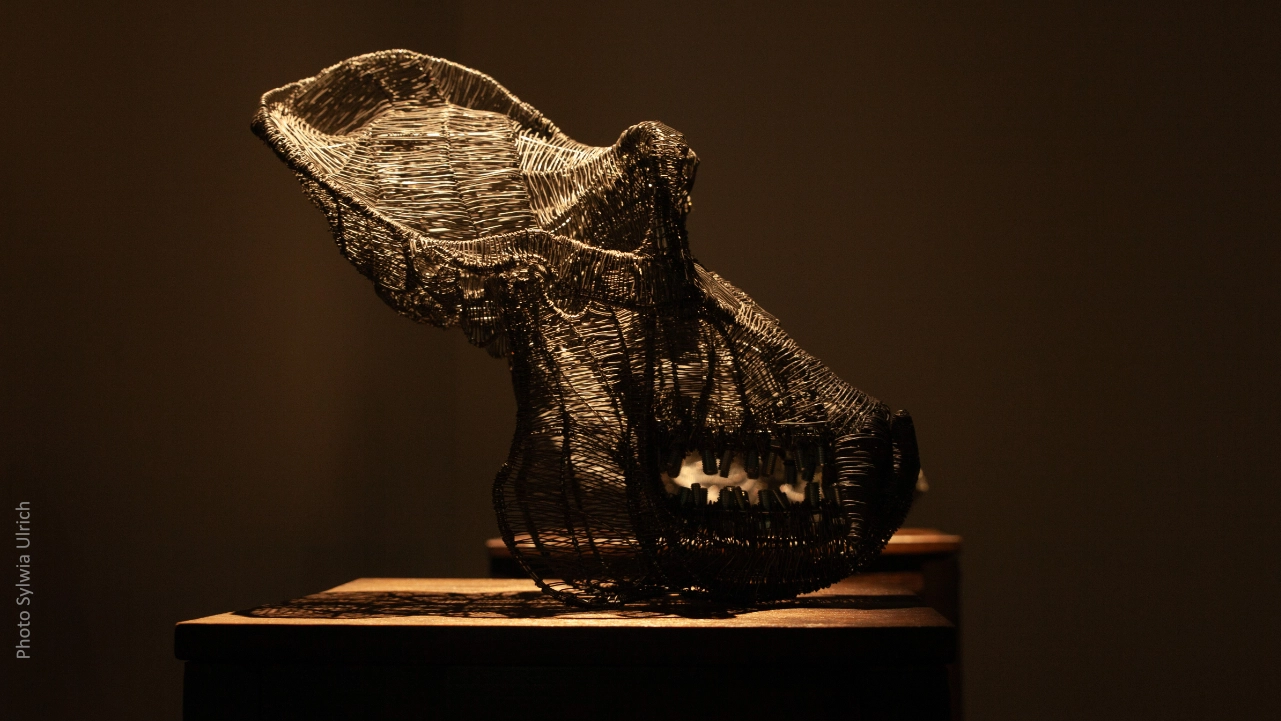
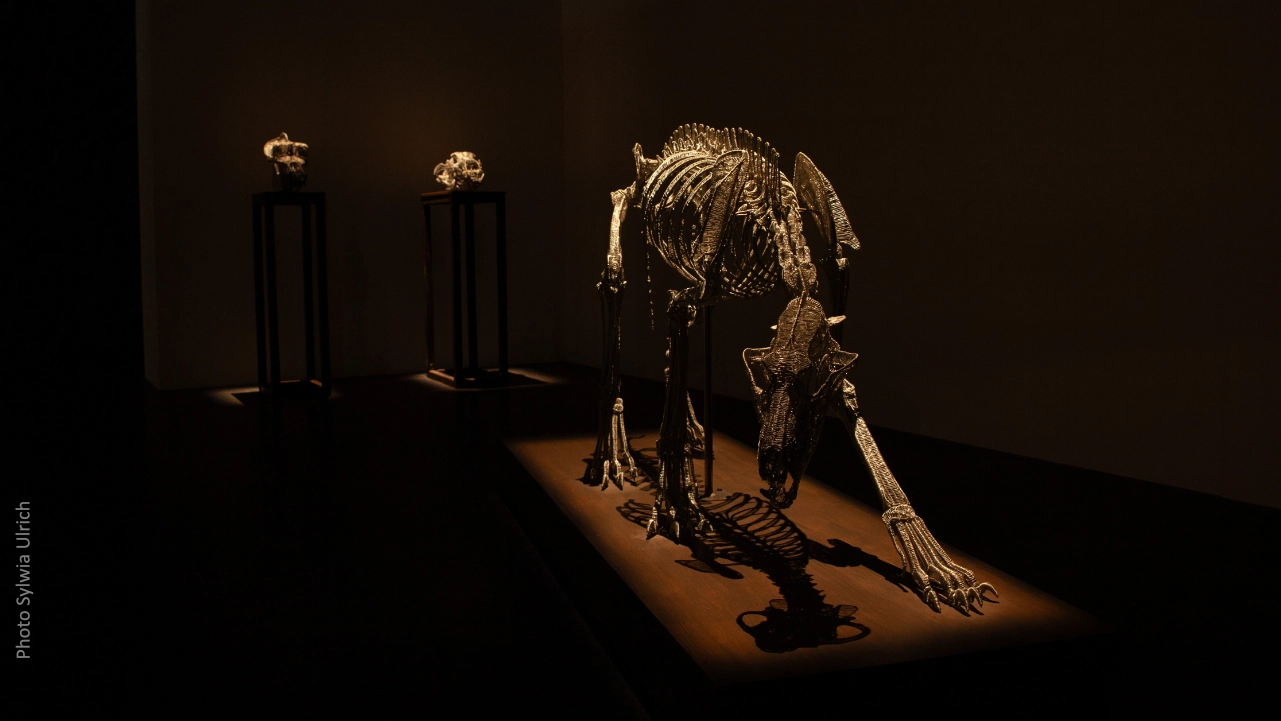
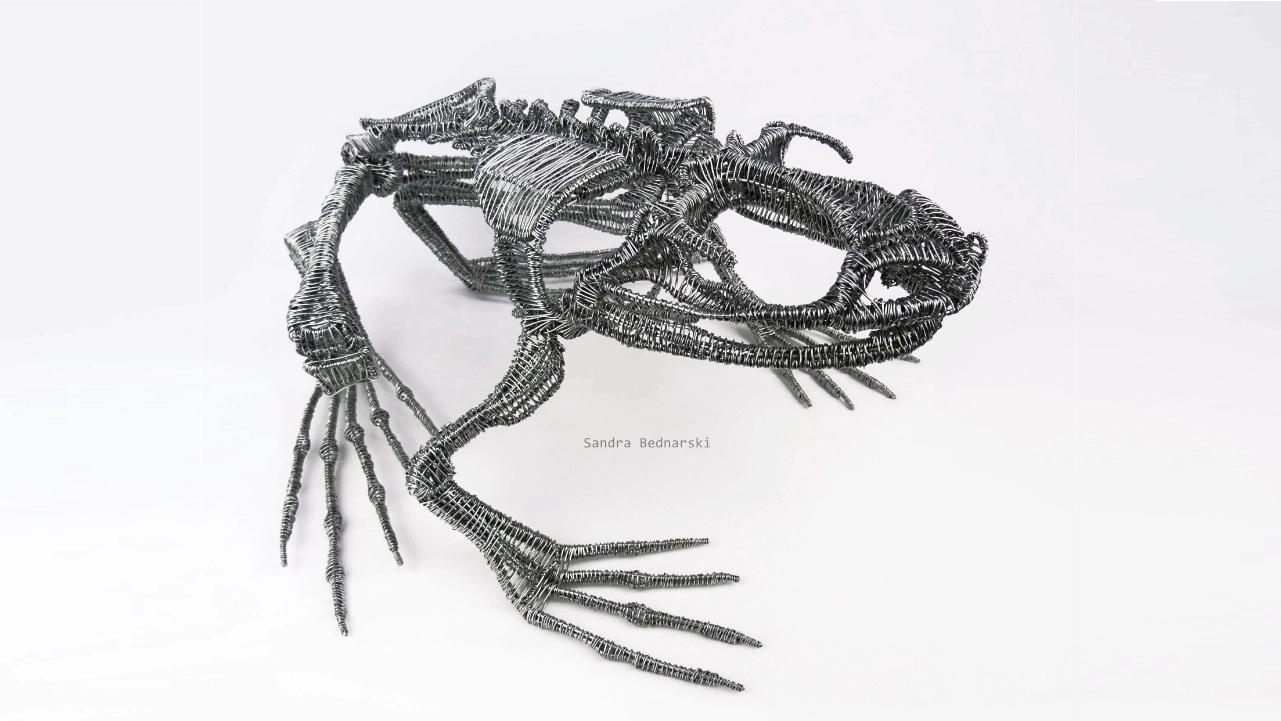
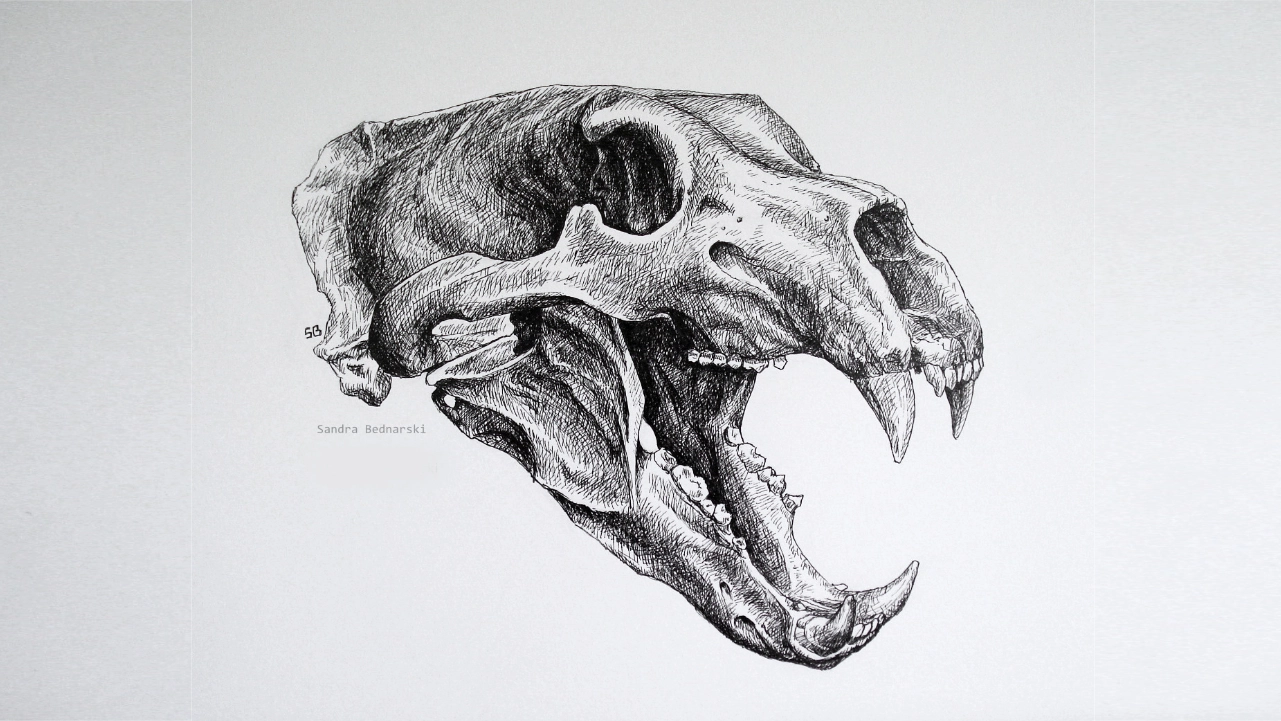
In 'Ossature', Sandra Bednarski offers a sensitive perspective on the animal skeleton. Her own fascination with this unique object is expressed in her complex and delicate sculptures. The anatomical precision and meticulous detail invite viewers to carefully observe each skull, bone, or vertebra – perhaps more closely than they would a real skeleton. She draws them into her own exploration of the vertebrate world, traversing the geological eras that saw the emergence of the most iconic or surprising specimens. She highlights the object's natural design when reproducing the skull of a bear or gorilla, as well as the richness and inventiveness of anatomical body designs, such as the Dimetrodon with its large dorsal sail. Here, one encounters animals, both current and extinct, with familiar or extravagant forms, ranging from small mammals to large carnivores. While the work surprises and captivates the visitor's gaze, it also encourages them to ponder this strange architecture that shapes a part of life itself.
New project
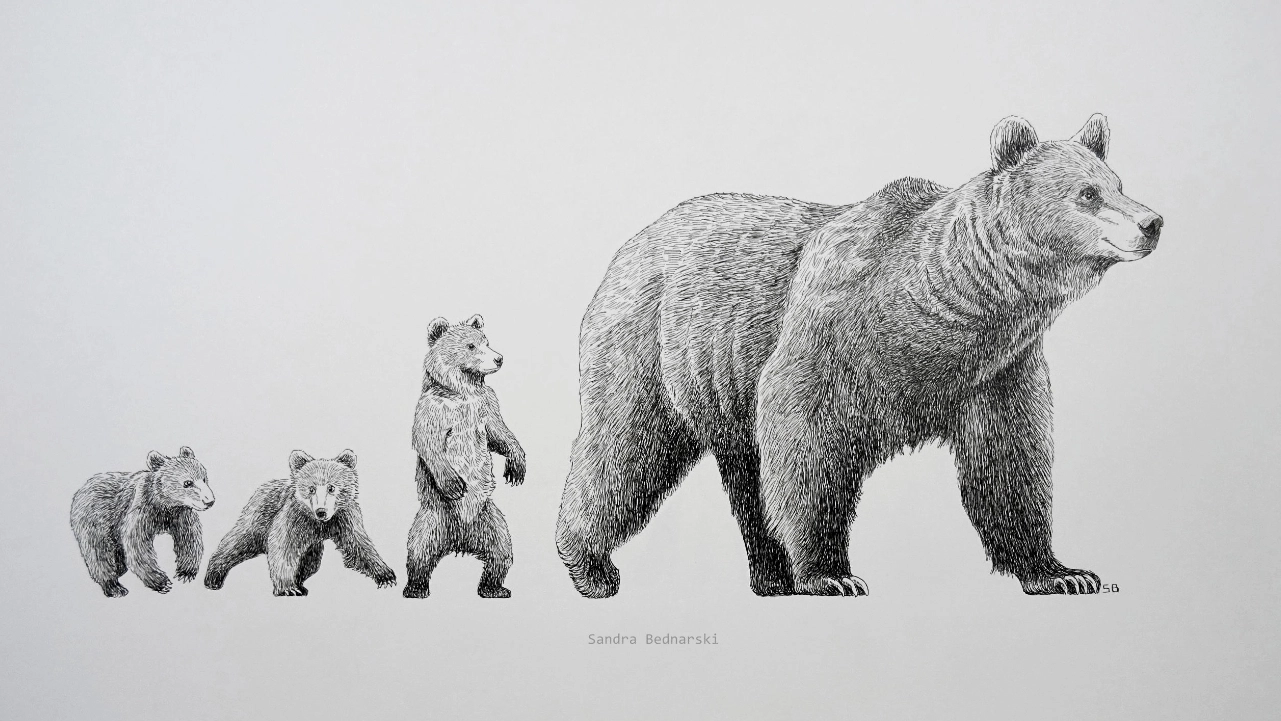
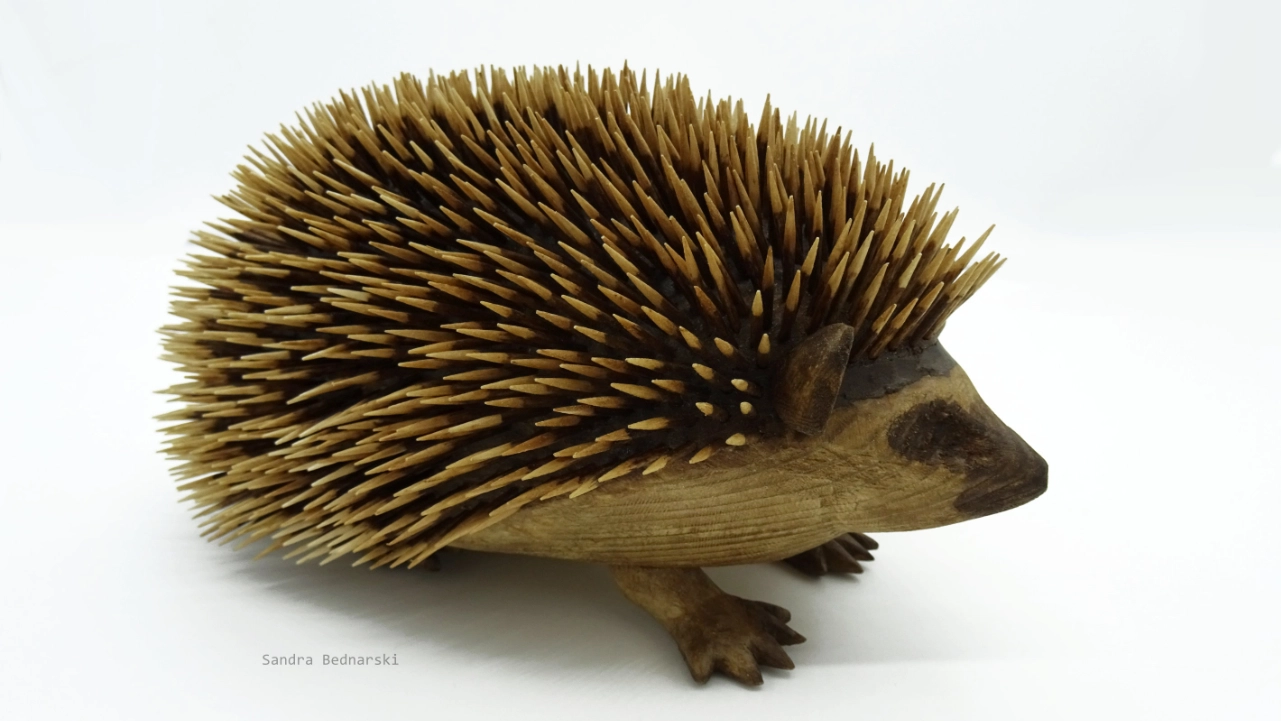
Still driven by her fascination with animal anatomy and its evolution, she attempts a new approach to the subject. This begins with the choice of a different medium, wood, and by representing the animal in flesh and muscle rather than as a skeleton, to make it feel closer to us or more alive. Continuing a quest begun with 'Ossature', she builds this new project around her own questions sparked by the surprising and abundant diversity from which only a few lineages have survived to the present day. What does this long, selective history teach us about life and about ourselves? To grasp the long timescale of evolution is to understand that it is still at work today; that it subtly influences the small genetic variability of each animal within each species; that a simple mutation can prove to be an unexpected adaptive advantage and disrupt an entire lineage; that nature is the greatest laboratory of innovation; and that there is a legacy to pass on, if we don't destroy it first.




57000 Metz